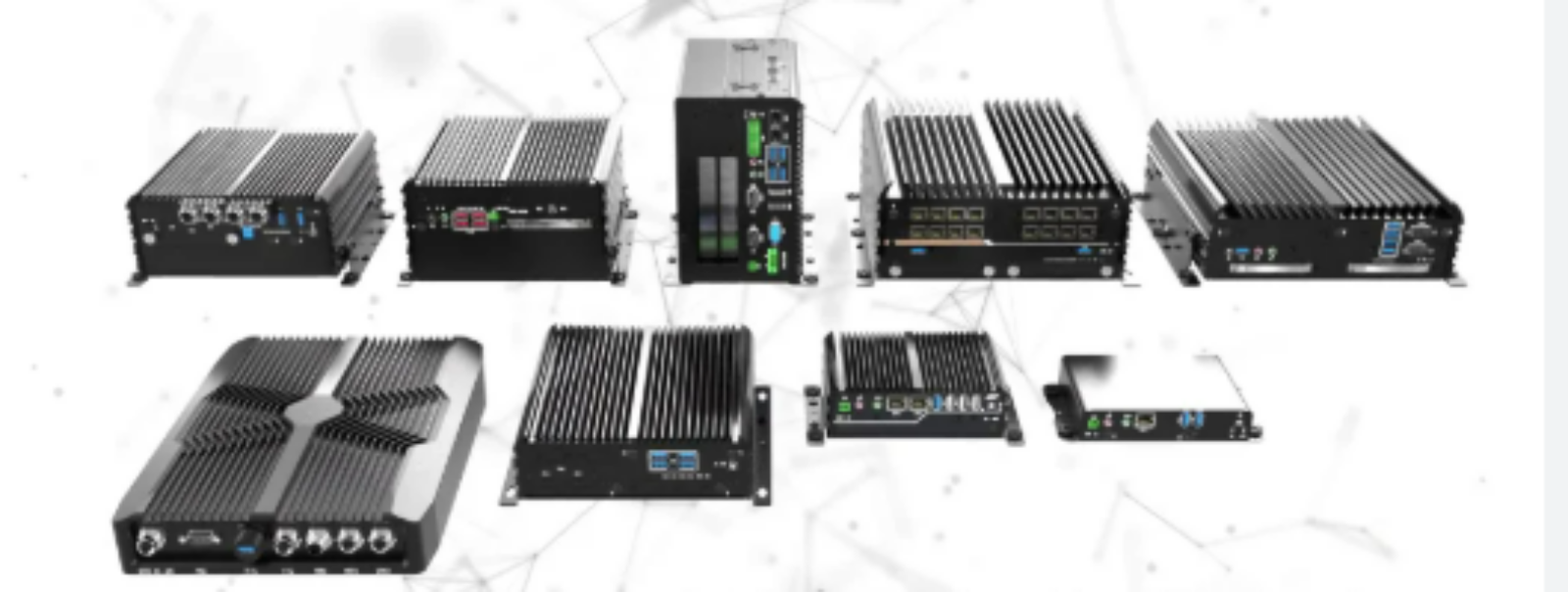
The shift from centralized cloud to distributed edge computing is no longer a forecast—it is the daily reality of 5G networks, smart transportation, industrial IoT, and on-site AI inference. When compute moves close to where data is generated, the hardware that houses it leaves the comfort of the air-conditioned data center. An edge computing cabinet is the rugged, often-sealed enclosure that keeps servers, gateways, and acceleration modules alive in a roadside cabinet, on a factory floor, or inside a cellular base station. This article breaks down how such cabinets are engineered—covering materials, ingress protection, EMI/RFI shielding, thermal management, and rack form factors—so procurement and engineering teams can specify them with confidence. If you are sourcing a fabrication partner, our OEM/ODM enclosure services cover the full path from prototype to production.
What Separates an Edge Computing Cabinet from a Data-Center Rack
A traditional data-center rack assumes a clean, climate-controlled room with raised-floor cooling, stable power, and easy physical access. An edge computing cabinet assumes the opposite. It may be mounted on a utility pole, bolted inside a steel street cabinet, or slid into a mobile vehicle bay where temperature swings, vibration, dust, and humidity are constant. The mechanical design therefore starts from environmental survival, not from rack-unit density.
Concretely, the differences show up in three areas. First, sealing: edge cabinets use gasketed doors, filtered vents, and often an IP65-rated shell so that rain, insects, and conductive dust cannot reach the electronics. Second, thermal strategy: instead of room-level CRAC cooling, the cabinet relies on internal conduction, heat pipes, filtered forced-air, or a closed-loop liquid path. Third, structural robustness: panels are specified for shock and vibration (commonly referenced to IEC 60068-2-6), and mounting hardware is chosen for long-term loosening resistance. When we design a cabinet for these conditions, we treat ingress protection, thermal headroom, and mechanical rigidity as primary specs rather than afterthoughts.
Mechanical and Environmental Specifications That Matter
The table below summarizes the parameters we typically lock down during the early design review. Matching the right value to the deployment scenario is what separates a cabinet that lasts ten years outdoors from one that fails in its first winter.
| Parameter | Typical Edge Requirement | Why It Matters |
|---|---|---|
| Material | 1.5–3.0 mm SECC/SGCC steel or 5052 / 6061 aluminum | Corrosion resistance, weight, EMI performance |
| Ingress protection | IP54 indoor, IP65 outdoor | Dust and water for street / telecom deployments |
| Operating temperature | −20 °C to +55 °C (extended −40 to +70 °C) | Unconditioned roadside and industrial enclosures |
| Thermal path | Passive heatsinks + filtered fans, or heat-pipe / liquid loop | Keep SoC / CPU below junction temperature |
| EMI / RFI shielding | 60–80 dB @ 1 GHz with conductive gaskets | CE / FCC electromagnetic compliance |
| Form factor | 19-inch rack, 1U–6U, short depth 300–600 mm | Fits street cabinets and wall boxes |
| Shock / vibration | IEC 60068-2-6, 5–500 Hz random profile | Road-side, rail, and mobile installations |
| Power input | 100–240 VAC, optional 48 VDC, redundant PSU bays | Carrier and industrial supply resilience |
EMI/RFI Shielding and Power Redundancy
Edge sites are electromagnetically noisy. A cabinet sitting next to a 5G radio unit or a factory variable-frequency drive must not let RF energy corrupt the compute inside, and must not itself become a broadband noise source. Achieving 60–80 dB of attenuation around 1 GHz typically means a continuous conductive path around every seam—using finger stock, conductive elastomer gaskets, or overlapping tongue-and-groove joints—plus filtered feed-through connectors for power and signal. We routinely verify shielding effectiveness on representative panels before committing to a production run.
Power is the second major failure mode. A single AC input is a single point of failure for an unattended site. We design edge computing cabinets with dual AC-input redundancy, an optional 48 VDC telco feed, and hot-swap power-supply bays so field technicians can replace a unit without powering down the compute load. Surge protection and EMI filters on the incoming line are standard, not optional, for outdoor and industrial deployments. For teams specifying these requirements, our sheet metal enclosure fabrication work includes shielded variants with integrated filtering.
Build Scenarios: From 5G Base Stations to AI Inference Nodes
The same chassis platform can serve very different edge roles once the internal tray and thermal design are adapted.
5G and small-cell sites. A compact outdoor edge computing cabinet may host a local breakout switch and a compute module that runs network slicing or video analytics. Here the priority is IP65 sealing, passive or fan-free cooling, and a short depth that fits a standard street cabinet.
Industrial IoT gateways. On a factory floor, the cabinet protects a hardened PC and I/O against oil mist, vibration, and EMI from motor drives, often with a 19-inch rack mount or wall-mount form factor.
NVIDIA Jetson Orin Edge AI Node
A fast-growing request is a NVIDIA Jetson Orin edge AI cabinet—a 19-inch, 2U short-depth box that carries an Orin module (up to roughly 275 TOPS) alongside NVMe storage and PoE feeding cameras. Because the Orin SoC runs hot under sustained inference, we pair a finned aluminum cold-plate with filtered forced-air or a heat-pipe loop and validate junction temperature under a worst-case thermal load. The result is a quiet, fan-tolerant node that sustains inference throughput in an unconditioned space.
How YW-TECH Delivers Low-Volume, High-Mix Edge Cabinets
YW-TECH is a custom chassis manufacturer based in Dongguan, China, supporting low-volume, high-mix edge cabinet programs across medical, military, communication, and edge-computing markets. For an edge computing cabinet program we typically run: CNC laser cutting of 1.5–3.0 mm steel or 5052/6061 aluminum, precision bending with ±0.1 mm tolerance, TIG/MIG welding or riveted assembly, and powder-coat or anodize finishing. Prototypes can be turned in days through our rapid-prototyping flow, then scaled to pilot and production batches without re-tooling the design.
We can provide design-for-manufacture feedback on your enclosure drawings, integrate EMI gaskets and filtered connectors, and build to your required IP and shock specifications. For programs that need it, we also support panel-PC and 19-inch rack-mount variants under one bill of materials. When your requirements are firm, contact our engineering team for a quote and we will return a DFM review and lead-time estimate.
Conclusion
A reliable edge computing cabinet is the sum of disciplined choices: the right material, a verified IP65 enclosure with energy-efficient cooling, a thermal path sized for the worst case, and power architecture that survives an unattended site. Specifying those early—and working with a fabrication partner that understands low-volume, high-mix production—turns a risky field deployment into a ten-year asset. Explore our OEM/ODM enclosure services to start a cabinet program, or reach the team directly to discuss your edge workload.